White Witch's wand
The White Witch's wand is the central instrument of her tyrannical power in Narnia, a golden rod that she wields to enforce her will and maintain her reign of eternal winter. It is the physical embodiment of her magic, capable of both instant petrification and the enforcement of the Deep Magic that binds the land. The wand's power is so absolute that its destruction becomes the turning point of the final battle, marking the end of the Witch's rule and the beginning of Narnia's liberation.
Appearance and Nature
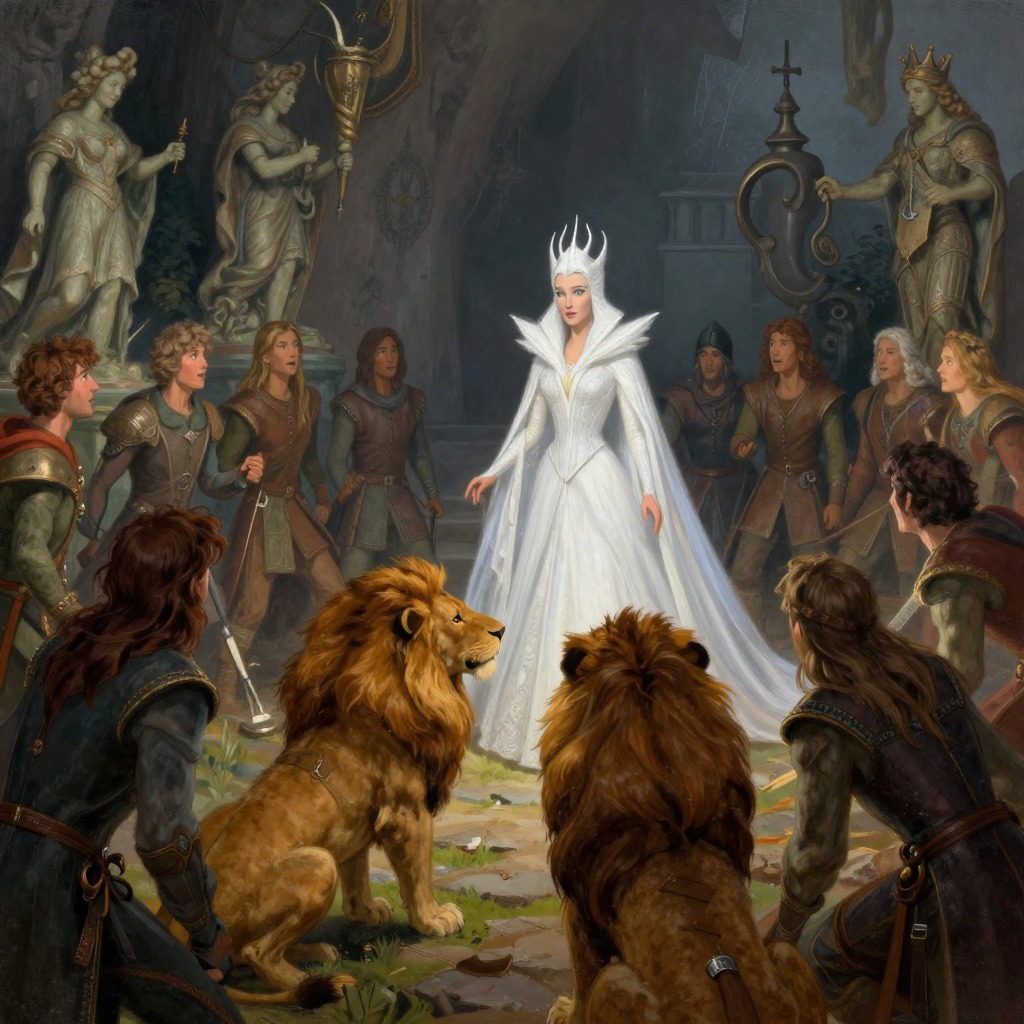
The wand is described as a "long straight golden wand" that the White Witch holds in her right hand. It is a slender, elegant object, but its beauty belies its deadly purpose. The wand is not merely a tool but a conduit for the Witch's magic, allowing her to perform feats of enchantment with a single gesture. When she raises it, her eyes flame, and Edmund feels sure she is going to do something dreadful. The wand's power is such that it can turn living creatures into stone with a wave, as seen when the Witch transforms a party of woodland creatures into statues after they celebrate the arrival of Father Christmas. The wand is also used to produce enchanted food, such as the Turkish Delight that ensnares Edmund, and to create a jewelled cup of hot drink from a single drop of liquid. The wand is thus a versatile instrument of both coercion and temptation, central to the Witch's ability to control Narnia.
Role in the Witch's Reign
The wand is the primary means by which the White Witch maintains her grip on Narnia. It is the source of her power to turn her enemies into stone, a fate that befalls many of her opponents, including the Faun Tumnus, who is turned into a statue in her castle. The wand is also used to enforce the eternal winter that has gripped Narnia for a hundred years, a spell that the Witch maintains through her magic. The wand is so central to her rule that she is unwilling to part with it even when negotiating with Aslan, insisting on keeping it with her during their parley. The wand's power is also a key factor in the Witch's confidence in battle, as she believes she can turn the ranks of Aslan's army into stone as they advance. The wand is thus not just a weapon but a symbol of the Witch's absolute authority, a tool that allows her to impose her will on the land and its inhabitants.
The Wand in the Final Battle
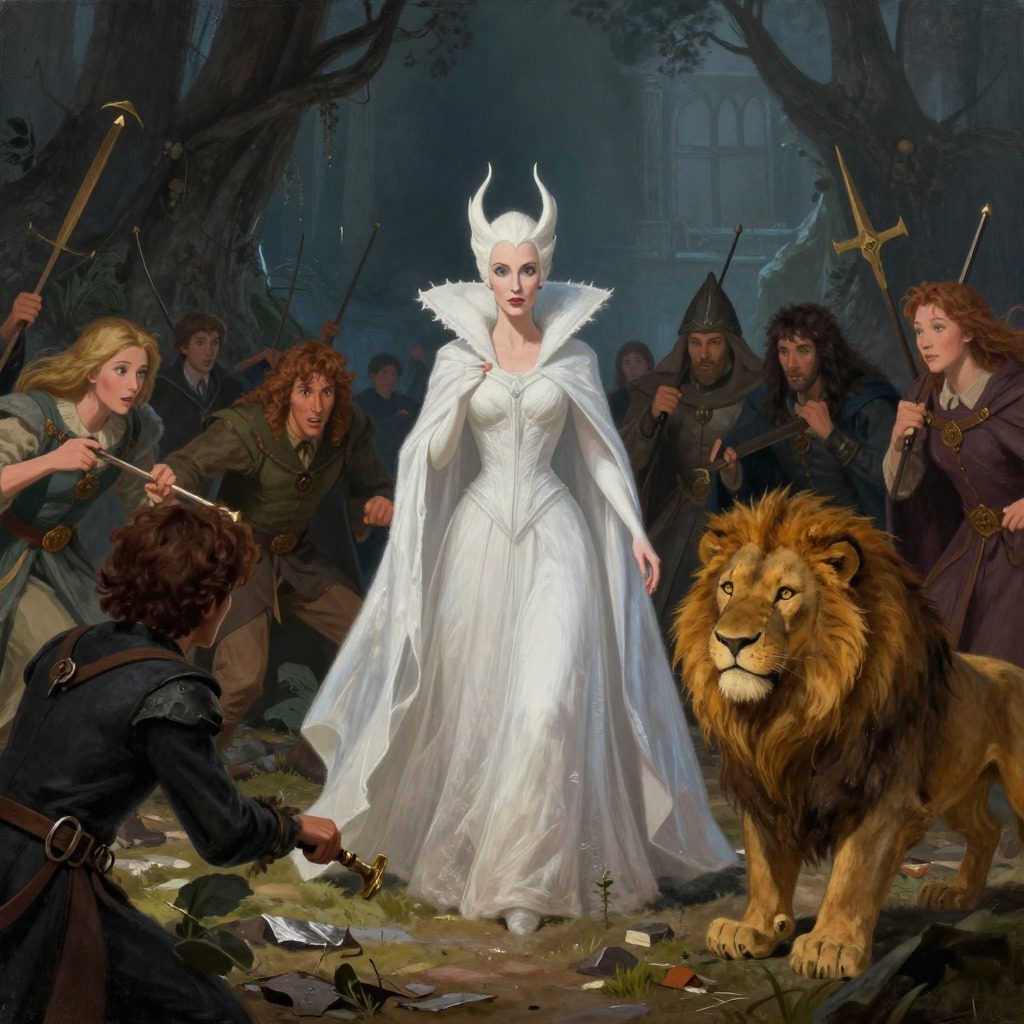
The wand plays a crucial role in the final battle between Aslan's forces and the White Witch's army. During the fighting, the Witch uses her wand to turn many of Aslan's troops into stone, creating statues that dot the battlefield. This petrifying power threatens to turn the tide of the battle against Aslan's forces. However, Edmund Pevensie, in a moment of strategic brilliance, realizes that the wand is the key to the Witch's power. He fights his way through three ogres to reach her and, instead of attacking her directly, brings his sword smashing down on her wand, breaking it. The moment the wand is shattered, the Witch's power is broken, and Aslan's forces begin to gain the upper hand. The destruction of the wand is the turning point of the battle, allowing Aslan to finally defeat the Witch and end her reign. The wand's destruction thus marks the end of the Witch's tyranny and the beginning of Narnia's liberation.
The Wand as a Symbol of Power
The wand is not just a magical object but a symbol of the White Witch's power and the tyranny she represents. It is the instrument through which she enforces her will, turning living beings into stone and maintaining the eternal winter that has gripped Narnia. The wand's destruction is therefore a symbolic act of liberation, breaking the Witch's hold on the land and allowing spring to return. The wand also represents the Witch's reliance on magic and force rather than justice or compassion, a contrast to Aslan's power, which is based on love and sacrifice. The wand is thus a key element in the story's exploration of power and its abuse, a physical manifestation of the Witch's evil that must be destroyed for Narnia to be free.